
Industrial automation.
PLC & SCADA.
Industrial automation and control panels from our Invercargill workshop for Southland and New Zealand projects. Bring the process requirements, existing system details and operating philosophy so we can define the panel, PLC, HMI and SCADA scope.
See our drinking-water control-panel work. CWS manufactured and wired the panels; project integrators handled programming and site commissioning.
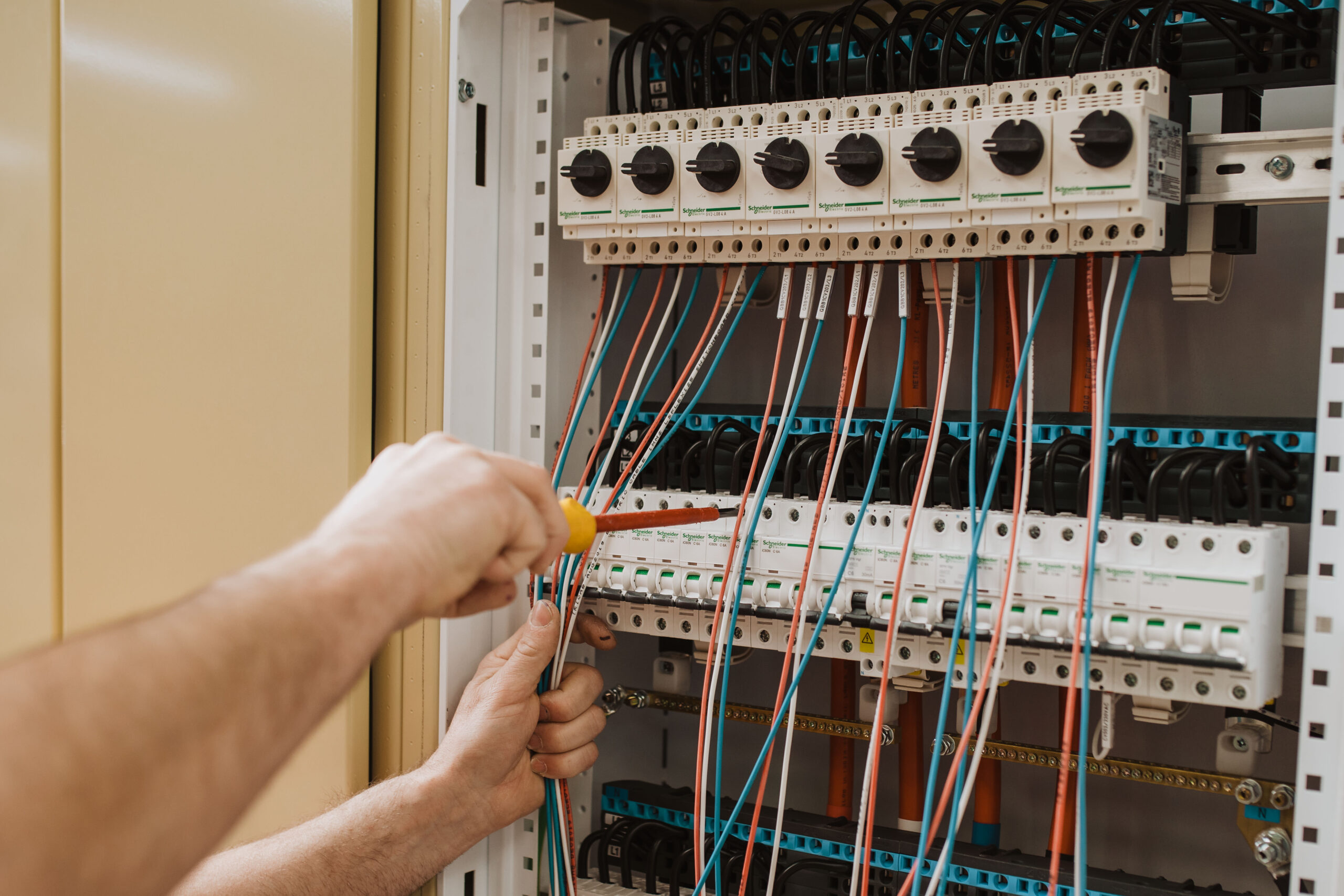
Control starts with the process.
An equipment list tells us what is connected. An operating philosophy explains how those devices work together: which pump leads, what permits a conveyor to start, when a valve must close and what an operator sees after a trip.
We develop the automation scope around those decisions rather than treating a PLC as an isolated component purchase. This connects the software requirements to the control-panel layout, motor feeders, field instruments and commissioning plan.
For a new system, the starting point may be a process description and an I/O list. For an existing plant, it may be a recurring fault, an expansion or a sequence that no longer matches the process.
| Operating condition | Questions to resolve |
|---|---|
| Normal operation | What starts the sequence? Which devices run together? What determines duty selection, changeover and stopping? |
| Manual and automatic modes | Where is control selected? Which commands are available locally and remotely? Which interlocks remain active? |
| Loss of a signal or communications | How is the fault detected and displayed? Does the process stop, hold a state or use an agreed fallback? |
| Power restoration | What requires operator acknowledgement? What restart conditions and sequencing are permitted? |
| Alarms and records | Which events need immediate action, acknowledgement, trending or an operating history? |
Process control and safety functions need separate attention. A normal PLC sequence or an HMI stop button should not be assumed to provide a safety-rated function. Identify required safety functions, responsibilities and validation in the project brief.
Connect the PLC, HMI and SCADA.
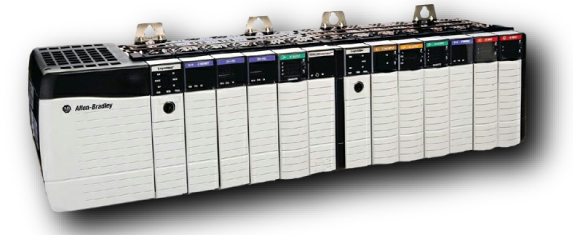
Our automation work spans Schneider Electric, Allen-Bradley and Siemens PLC platforms, with HMI and supervisory integration including Citect/AVEVA and Ignition where specified. We can combine the controls work with CWS-built MCCs, switchboards and automation panels so the electrical and software interfaces are developed together.
PLC panels and field I/O
Define digital and analogue signals, instrument supplies, terminal arrangements, marshalling, spare I/O and future panel space. An accurate signal list reduces uncertainty about what is included in the panel and what remains with the field installer.
HMI and SCADA
Agree the operator screens, alarm descriptions, trends, access levels and commands that the project requires. A local HMI and a site-wide SCADA system serve different purposes; supplying a panel does not automatically include every supervisory software or licence requirement.
Motor and drive interfaces
For motor control centres, define start permission, run command, actual running feedback, trip status, reset and speed reference where applicable. Hardwired signals and networked data should have clear ownership and agreed behaviour.
Site networks and access
Confirm communication protocols, addressing, the site network boundary and who approves connection changes. Remote support arrangements, when required, should be agreed with the site owner rather than assumed to be part of panel supply.
Upgrade around the existing plant.
Existing controls bring constraints that a new installation may not have: incomplete drawings, unavailable software, legacy communications, limited shutdown windows and equipment that must remain in service.
Provide the controller and HMI models, current software versions, available source files, network information and known problems. The assessment needs to establish what can be retained, what needs replacement and which interfaces require testing.
A practical change brief
- Record the existing behaviour before changing it, including any workarounds operators rely on.
- Identify available backups, access permissions and the process for restoring an agreed known state.
- Agree shutdown limits, staged testing and the people authorised to accept the change.
- Update the drawings, signal lists and software records to match the final installation.
Invercargill and Southland support: local automation, controls modifications and commissioning support can be scoped for Southland industrial sites from our Invercargill base. Site attendance, response expectations, travel and the required support window are agreed for each project rather than represented as an unrestricted 24/7 service.
Factory checks and site proving are different stages.
Before the panel leaves the workshop
Agree the factory acceptance test scope: panel wiring checks, available I/O simulation, command and feedback mapping, operator displays and selected normal or abnormal sequences. Record what was demonstrated, what was simulated and what still requires connected plant.
With the installed equipment
Site commissioning connects the panel to the real instruments, motors, actuators and process. Point-to-point checks and agreed operational tests establish that field connections and control behaviour match the approved requirements.
Define the handover package
Specify the required electrical drawings, I/O schedules, software backups, version records, operating instructions and test results. Agree software access and licensing responsibilities explicitly, including any restrictions associated with third-party equipment.
Evidence of panel manufacture: the Frimley and Eastbourne drinking-water projects included CWS-manufactured Allen-Bradley PLC control panels alongside MSBs, MCCs and pump control panels. On that project, CWS manufactured and wired the control panels; the project control-system integrators were responsible for programming and site commissioning. Explore the Frimley and Eastbourne project.
Send the process requirements, not just the PLC model.
Include the process description, I/O list, existing platforms, drawings, network interfaces, site location and required programme. State whether the scope is panel manufacture, programming, integration, commissioning or a combination.
Can you build the panel for our own controls team?
Yes. Panel manufacture and automation work can be scoped separately. Provide the hardware schedule, drawings and interface requirements so responsibility for programming, field wiring and testing is clear.
Can a small modification be assessed without a complete redesign?
Start with the proposed change and the information available about the existing system. Compatibility, access to software, remaining I/O and testing requirements determine the appropriate scope.
Does a new PLC panel include the SCADA system?
Not automatically. SCADA software, licences, screens, servers, site networking and integration are separate scope items that should be identified in the quotation.
Start with the process.
Define the controls.
Send the control philosophy, I/O information and existing system details so we can agree the panel and integration scope.
Printable quote checklist (PDF)Email your checklist, drawings and schedules to estimating@clivewilson.co.nz. Leave unknown items blank.
Discuss your automation projectOr call +64 3 214 4264