
Backup protection can allow a downstream protective device to be used beyond its standalone breaking capacity when a specific upstream and downstream combination has suitable manufacturer evidence. A higher-rated incomer alone is not enough.
What backup protection means
Manufacturers use terms such as backup protection, cascading and enhanced breaking capacity for coordinated arrangements. The exact product documentation determines which combination is supported, at what voltage and prospective fault level, and under what conditions.
The devices may both contribute to limiting and interrupting the fault. It is misleading to describe the arrangement as simply “the incomer trips first”. The behaviour depends on the tested combination and fault conditions.
Backup protection versus selectivity
| Objective | Question to answer |
|---|---|
| Backup protection | Can the documented device combination safely interrupt the specified fault duty? |
| Selectivity | Over what fault-current range will the downstream device clear a fault without opening the upstream device? |
| Assembly verification | Can the completed assembly meet its declared short-circuit characteristics with the specified protection? |
A combination can provide backup protection without providing full selectivity. That distinction matters where opening the incomer would stop other production equipment. Resolve continuity requirements before selecting the protection strategy.
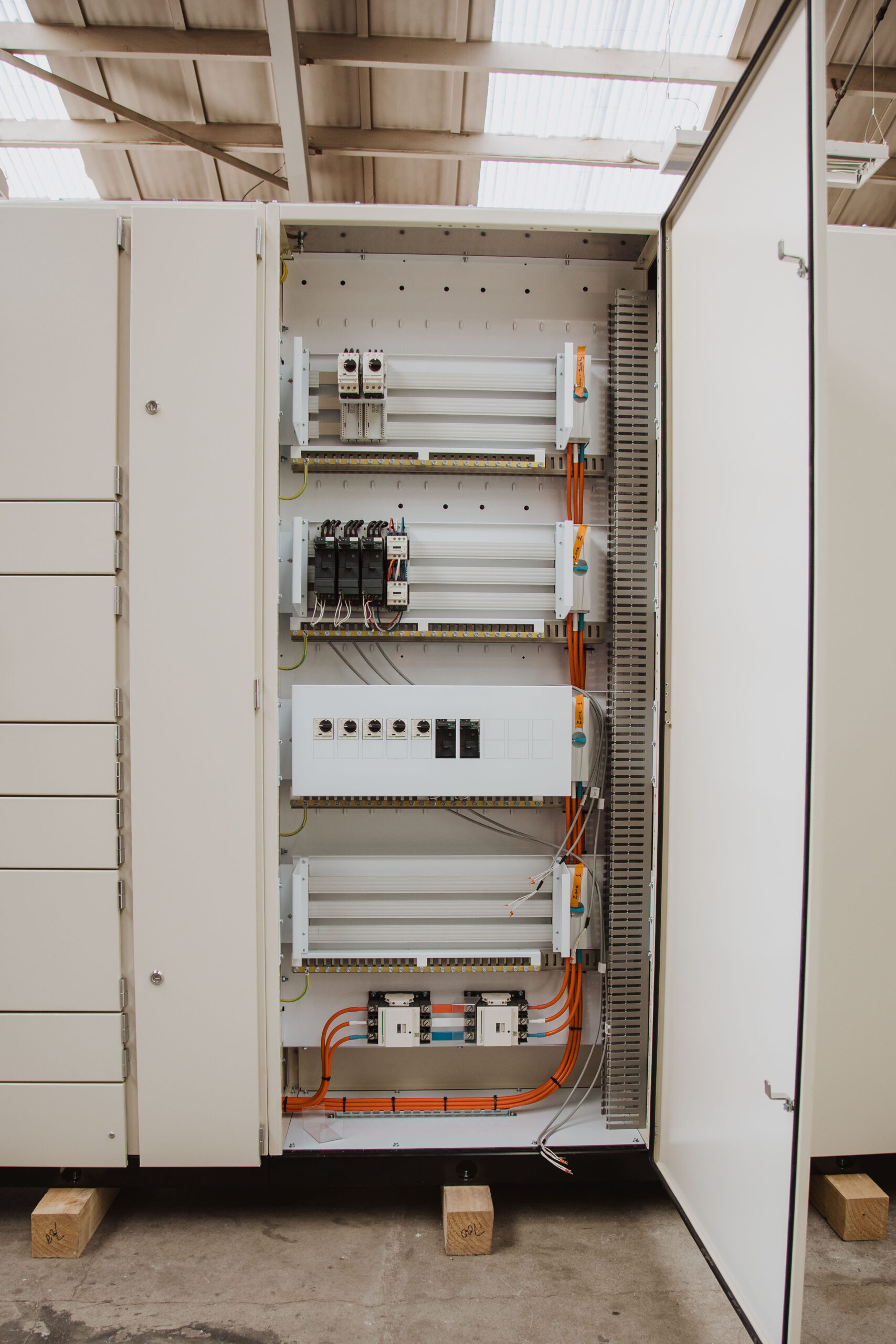
Evidence to record
- Exact upstream and downstream manufacturer, product reference, frame, trip unit and relevant settings.
- System voltage, poles and the applicable fault-current limit.
- Manufacturer coordination table or supported selection-tool output, with document revision.
- Any installation, cable, conductor or device conditions imposed by that evidence.
- Separate confirmation of the assembly’s short-circuit verification basis.
- Acceptance by the project designer where the specification permits this arrangement.
Use the current documentation for the actual products. Similar names, current ratings or frame sizes do not establish equivalence. Never substitute a cross-brand pairing without explicit supporting evidence.
What changes need a review?
Replacing an incomer, changing a trip unit, altering settings, adding a circuit or increasing the supply fault level may affect the basis of the arrangement. An outgoing breaker fed from the same busbar does not acquire a lower fault duty merely because it supplies a long cable. The connection point and fault location matter.
Agree the approach before procurement
Identify whether the specification allows backup protection or requires devices with adequate standalone breaking capacity at each connection point. Compare both the procurement implications and the effect on supply continuity. Any saving is project-specific.
For a quotation, send the fault-rating information, single-line diagram, device preferences and selectivity requirements. CWS can then discuss the arrangement as part of a defined manufacturing scope, with assumptions visible before equipment is ordered.
Questions we hear
Can any high-breaking-capacity incomer back up a smaller breaker?
No. The specific combination and its conditions need supporting manufacturer documentation.
Does cascading guarantee that only one circuit trips?
No. That is a selectivity question. Check the documented selectivity limit separately from the backup-protection limit.