
Choose monitoring around the question you need to answer. Energy consumption, voltage events, harmonics and equipment-trip investigation require different data. A basic energy meter may not capture the event that matters.
Write down the investigation question
Are you investigating an unexplained trip, checking a planned load addition, allocating energy costs or assessing supply conditions? Define the outcome before choosing the meter. Include the equipment, symptoms and any event timestamps.
For a recurring issue, capture the operating modes in which it appears. Monitoring for a fixed number of weeks is not automatically sufficient if the relevant production cycle or disturbance never occurs.
Match the instrument to the task
| Objective | Useful capability |
|---|---|
| Load and energy management | Current, power, energy and demand trends with suitable logging intervals. |
| Trip investigation | Time-stamped dips, swells, interruptions and event records. |
| Harmonic assessment | Appropriate voltage and current harmonic measurements. |
| Transient investigation | Specific high-speed capture capability suited to the event. |
| Comparison or contractual measurement | An agreed method, instrument class, calibration and reporting basis. |
IEC 61000-4-30:2025 describes power-quality measurement methods and includes Class A and Class S. Where comparable or contractual results are needed, agree the required class and edition with the parties. Class A capability is not established by a generic “power quality” label.
Choose the measurement locations
The incomer helps characterise conditions at the installation supply. A measurement near affected equipment may show what it actually experiences. In some cases, simultaneous upstream and downstream records are needed to understand where a disturbance originates.
Installation of measurement equipment needs competent electrical personnel and a safe work plan. Consider permanent metering connections or other arrangements that support safe future access.
Make the records usable
- Synchronise timestamps with the equipment or process event log.
- Record instrument configuration, ratios, measurement points and operating conditions.
- Retain the event details, not only a summary chart.
- Set meaningful alarms and identify who receives them.
- Agree data access, retention, export and ownership.
- Confirm network permissions and security for connected meters.
Agree the protocol, register map, units, scaling, alarms and network settings with the integrator before factory acceptance testing.
Act on evidence
Review whether events correlate with the reported symptoms and whether the recording covers the relevant operating conditions. Investigate other possible causes as well. Then select and verify any remedial action, rather than installing filters or capacitors by assumption.
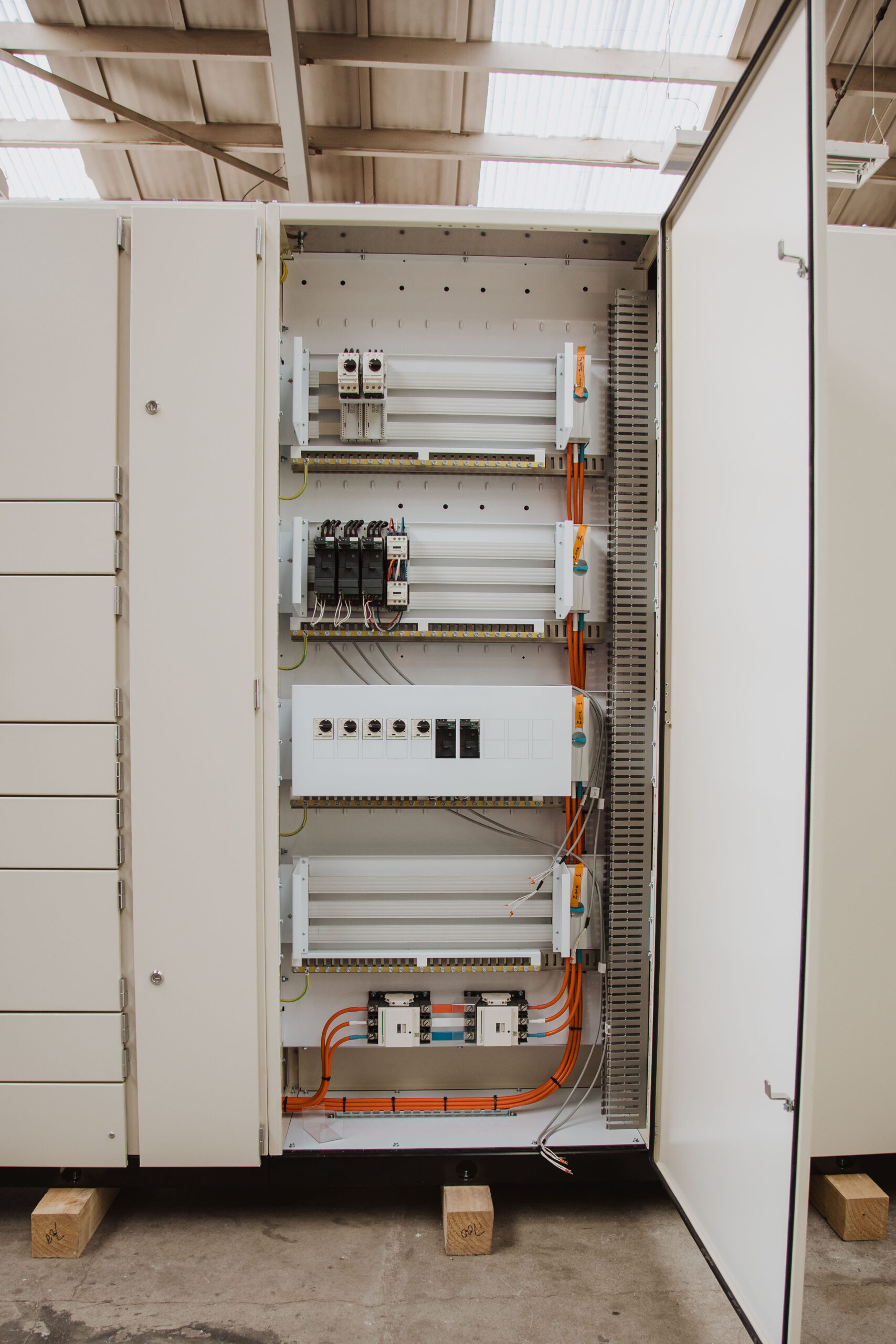
CWS can incorporate suitable metering and interfaces into switchboards and control systems. Send the monitoring objective and required outputs with the project brief. Explore switchboard protection and monitoring options for the wider equipment and interfaces. For an overview of the business impact, see why power quality matters.
Questions we hear
Will any smart meter find a short voltage dip?
No. Check its event detection, recording and time resolution. Energy totals alone are not enough.
How long should we monitor?
Long enough to cover the relevant operating modes or events, as agreed for the investigation. There is no single duration that suits every site.