33 Clyde Street, Invercargill 9810, NZ
Mon-Fri 08:00 AM - 05:00 PM

IP Rating & Material Selector for Switchboards

Specifying the right IP rating and enclosure material for a New Zealand LV switchboard comes down to where it lives and what it has to survive — indoor or outdoor, dust levels, water exposure, coastal salt air, geothermal H₂S, or chlorinated wash-down. This selector walks you through six short questions about your installation environment and recommends an IP rating per AS/NZS 60529 and an enclosure material (mild steel powder coated, 304 stainless, or 316 stainless) that matches the conditions. Clive Wilson Switchboards manufactures LV switchboards to AS/NZS 61439 in Invercargill, and every board is IP-verified during routine production testing.

Step 1 of 6
Installation environment

Where will the switchboard be installed?

Indoor
Conditioned or unconditioned space, fully protected from weather
Outdoor sheltered
Under verandah, awning, external wall with overhang
Outdoor exposed
Direct weather, no shelter, full rain and UV exposure
Specialised environment
Wash-down, hazardous area, marine, geothermal, pharmaceutical
Next

IP Rating & Switchboard Enclosure FAQ

Common questions we get from NZ electrical engineers, specifiers and contractors about picking the right IP rating and enclosure material for a low-voltage switchboard.

What IP rating do I need for an outdoor switchboard in New Zealand?

For a typical outdoor sheltered switchboard, under an eave, covered walkway or plant deck, IP55 is usually sufficient and is the Clive Wilson house standard for industrial and commercial work. For fully exposed outdoor locations, driving rain, or coastal-adjacent sites, specify IP56 or IP66. Any outdoor switchboard also needs to be assessed for UV exposure, thermal load and material selection, powder-coated mild steel is fine for most inland sites, while coastal installations within 1–5 km of the sea should step up to 304 stainless, and sub-1 km marine or geothermal H₂S sites should use 316 stainless.

What's the difference between IP54, IP55 and IP66?

The two digits in an IP rating (per AS/NZS 60529) describe protection against solids (first digit) and liquids (second digit).

IP54, dust protected (not dust tight) and splashing water from any direction. Suitable for indoor industrial environments and light outdoor sheltered use.

IP55, dust protected and water jets from any direction. The Clive Wilson default for most industrial and commercial switchboards.

IP66, fully dust tight and powerful water jets. Used for fully exposed outdoor switchboards, severe weather locations, and coastal installations.

Do I need 316 stainless steel for a coastal switchboard?

It depends on how close the switchboard is to the sea and how sheltered it is. As a rule of thumb we use on Clive Wilson quotes:

More than 5 km inland, powder-coated mild steel is generally fine.
1 km to 5 km from the sea, 304 stainless is usually specified for outdoor enclosures (adds 15–25% to the board cost).
Less than 1 km from the sea, chlorinated wash-down, chemical plant, or geothermal H₂S, specify 316 stainless (40–60% uplift).

304 will eventually show tea-staining in aggressive marine air, so for anything directly exposed to salt spray, 316 is the safer long-term spec.

What IP rating is required for dairy wash-down environments?

For dairy factories, meat processing and pharmaceutical plants where hot, high-pressure wash-down is part of the daily cleaning regime, specify IP66 combined with IP69K. IP69K adds protection against high-temperature, high-pressure jet cleaning (typically 80 °C water at 80–100 bar) that is standard in food-grade facilities. The enclosure should also be 316 stainless with smooth, crevice-free welds and a sloped top to shed water.

What is IP69K and when do I need it?

IP69K is an extension of the standard IP rating system that specifically tests protection against close-range, high-pressure, high-temperature water jets. It's defined in ISO 20653 and referenced for switchboards and control panels in hygienic production environments.

Specify IP69K (usually expressed as IP66/IP69K) for dairy factories, meat and seafood processing, pharmaceutical manufacturing, and any plant where caustic or high-temperature wash-down is part of routine cleaning. For general outdoor or industrial switchboards, IP55 or IP66 is enough, IP69K adds cost and is overkill outside of wash-down applications.

What AS/NZS standards apply to switchboard IP ratings in New Zealand?

Three standards are relevant to IP rating and switchboard specification in NZ:

AS/NZS 60529, defines the IP rating system itself (degrees of protection provided by enclosures).
AS/NZS 61439, the low-voltage switchgear and controlgear assemblies standard. All Clive Wilson switchboards are built to 61439.
AS/NZS 3000, the NZ/AU wiring rules, which reference IP requirements for specific locations (wet areas, outdoor, hazardous zones).

Final IP rating and material selection should always be verified by a qualified electrical engineer against the full project context and any sector-specific standards (for example dairy MPI requirements or hazardous area classifications).

Can I use powder-coated mild steel for an outdoor switchboard in NZ?

No. Powder-coated mild steel does not last well as a fully exposed outdoor switchboard in New Zealand. It is an excellent indoor enclosure and is fine under eaves or inside sheltered plant rooms, but in genuine outdoor service UV, rain and thermal cycling eventually break down the powder coat. Once moisture reaches bare steel you get rust-through around gland plates, door edges and fixings.

For outdoor switchboards step up to 304 stainless for most inland sites (more than 5 km from the sea), and 316 stainless for coastal locations within 5 km of the sea, geothermal H₂S zones (Rotorua, Taupō volcanic zone), wash-down facilities, or any chemical plant environment.

What IP rating do data centre and BESS switchboards need?

Indoor data centre switchrooms are typically specified to IP42 (Clive Wilson minimum) or IP54 where there's any risk of dust or accidental splashing. Most main switchboards in data centres sit at IP55 for consistency across the facility.

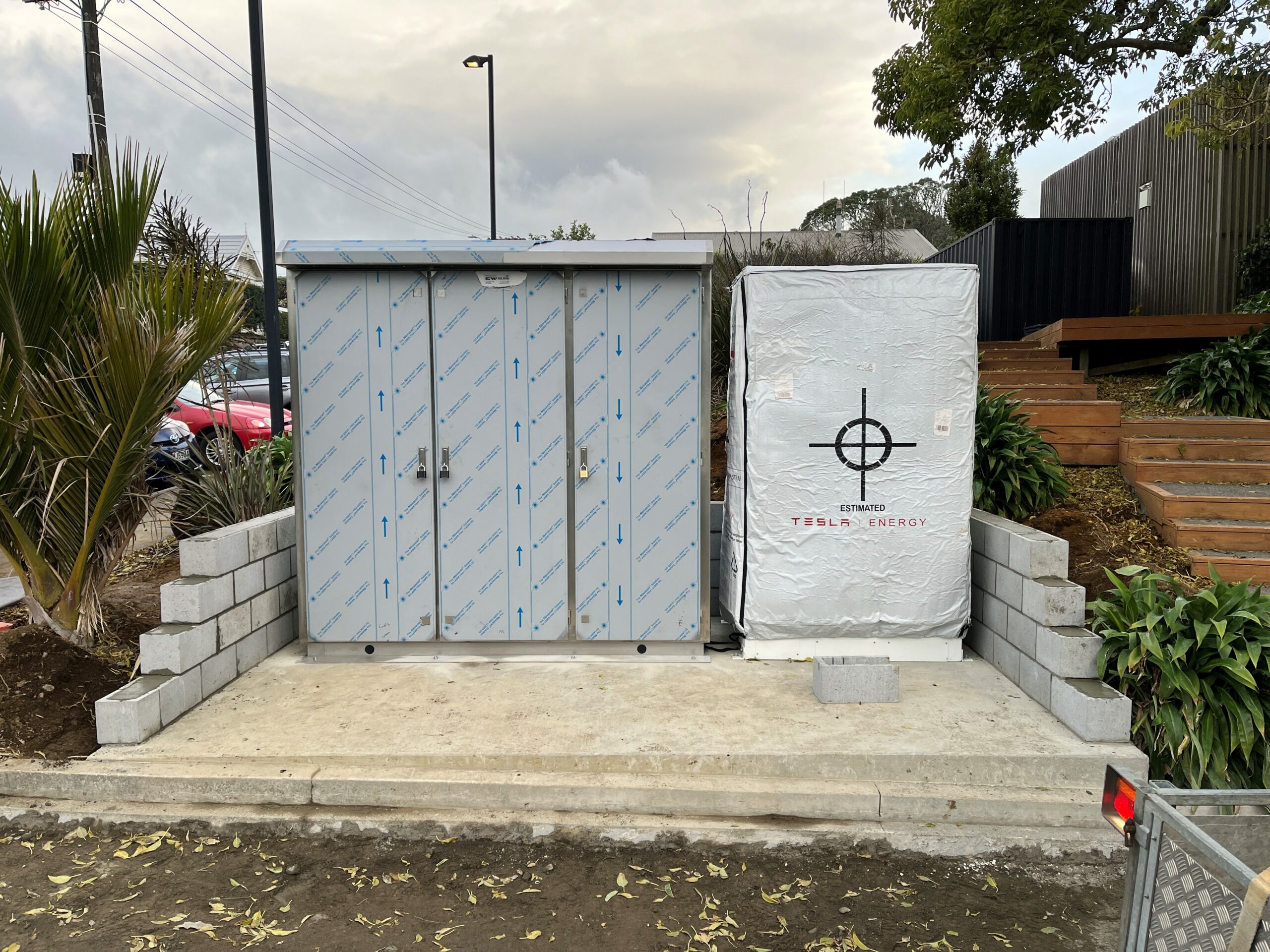
Outdoor BESS (battery energy storage) and solar DC/AC kiosks, on the other hand, should be specified to IP56 or IP66 minimum, usually in 304 or 316 stainless depending on site exposure. For EV charging kiosks we build to IP54 as a minimum, stepping up for coastal or public-space installations.

Need a specific recommendation for your project? Clive Wilson has been building LV switchboards to AS/NZS 61439 from Invercargill since 1971. Send us your load list or spec and we'll return a BoQ with the right IP rating, enclosure material and build sequence. Get a switchboard quote →