Switchboards April 2026 · 6 min read
Choosing the right IP rating for a switchboard is a fundamental specification decision. Under-specify and the enclosure corrodes or lets in water. Over-specify and you are paying for protection the installation never needs. Here is a practical guide to getting it right for NZ conditions.
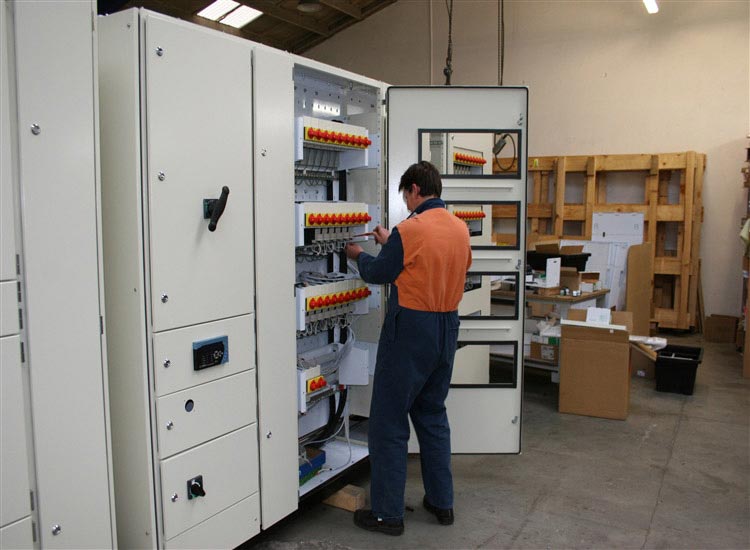
IP ratings follow the IEC 60529 standard, which defines how well an enclosure protects against the ingress of solid particles and water. Every switchboard supplied or manufactured by Clive Wilson Switchboards is rated to the correct IP level for its installation environment, in line with AS/NZS 3000 and AS/NZS 61439.
An IP rating has two digits. The first covers protection against solids and dust. The second covers water ingress. Higher numbers mean greater protection.
| Digit | What It Rates | Range |
|---|---|---|
| First digit | Solid objects and dust | 0 (none) to 6 (dust-tight) |
| Second digit | Water ingress | 0 (none) to 9K (high-pressure hot jet) |
In switchboard specification the most commonly used ratings are IP42, IP54, IP65, and IP66. The correct choice depends entirely on the installation environment.
| Environment | Minimum IP | Recommended | Typical NZ Applications |
|---|---|---|---|
| Clean indoor (office, commercial) | IP41 | IP42 | Distribution boards, commercial fit-outs |
| Light industrial, dry | IP42 | IP54 | Workshops, general manufacturing |
| Industrial with dust or splash | IP54 | IP55 | Processing plants, factories |
| Dusty environment | IP55 | IP65 | Grain, woodworking, mining |
| Outdoor, sheltered | IP54 | IP65 | Covered plant rooms, car parks |
| Outdoor, exposed | IP65 | IP65 | Pump stations, rural, water treatment |
| Coastal, exposed to sea spray | IP65 | IP66 | Marine infrastructure, boat sheds |
| Dairy or food washdown | IP65 | IP66 | Dairy farms, food processing |
IP54 (dust protected, splash resistant from any direction) is the minimum for most NZ industrial switchboards. It is appropriate where occasional dust or water splash is possible but high-pressure hosing does not occur. It is not adequate for dairy farms, food processing, or any environment with regular direct hosing.
IP65 (fully dust-tight, protected against low-pressure water jets from any direction) is the correct standard for most outdoor NZ installations and for indoor areas where routine hosing takes place. It is the default recommendation for pump stations, rural installations, and covered plant rooms that are hosed down as part of routine cleaning.
IP66 provides protection against powerful water jets (100 L/min at 100 kPa) versus IP65 (12.5 L/min at 30 kPa). Specify IP66 for dairy and food processing facilities, for enclosures exposed to sea spray or wave action, and for any site where high-pressure hosing is part of routine operations.
Under AS/NZS 3000, all electrical equipment must be suitable for the environment in which it is installed. Under AS/NZS 61439, the switchboard designer and manufacturer are both responsible for ensuring the correct ingress protection is specified and achieved. These obligations cannot be delegated to the installer alone.
One critical point: the IP rating applies to the enclosure body only. Cable entries must be sealed with correctly sized cable glands to achieve the stated IP level. An unsealed gland reduces effective protection to IP00 regardless of the enclosure rating. This is the most common compliance failure we encounter during site inspections.
Related reading:
Talk to us about IP rating and enclosure specification for your NZ project
📍 31-33 Clyde Street, Invercargill · 📞 +64 3-214 4264