
33 Clyde Street, Invercargill 9810, NZ
Mon-Fri 08:00 AM - 05:00 PM
Post Image
20 Apr, 2026
Posted by Chris Wilson
0 comment

Switchboard Upgrade or Replacement NZ | Clive Wilson

Upgrade & ReplacementUpdated  ·  11 min read

Switchboard Upgrade or Replacement in NZ: What Information Do You Need?

Switchboard upgrade and replacement projects need more upfront information than equivalent new-build work. The more clearly a project is defined at enquiry stage, the more accurate the pricing, the tighter the programme, and fewer surprises on site.

Quick answer

A switchboard upgrade or replacement enquiry needs ten information areas to be priced accurately: existing board details, the reason for the work, electrical ratings and fault level, outgoing circuits, dimensions and physical constraints, site access and environmental conditions, shutdown and changeover requirements, drawings and photos, compliance and documentation expectations, and programme. The more of these defined at enquiry stage, the more reliable the quotation and the lower the risk of later redesign.

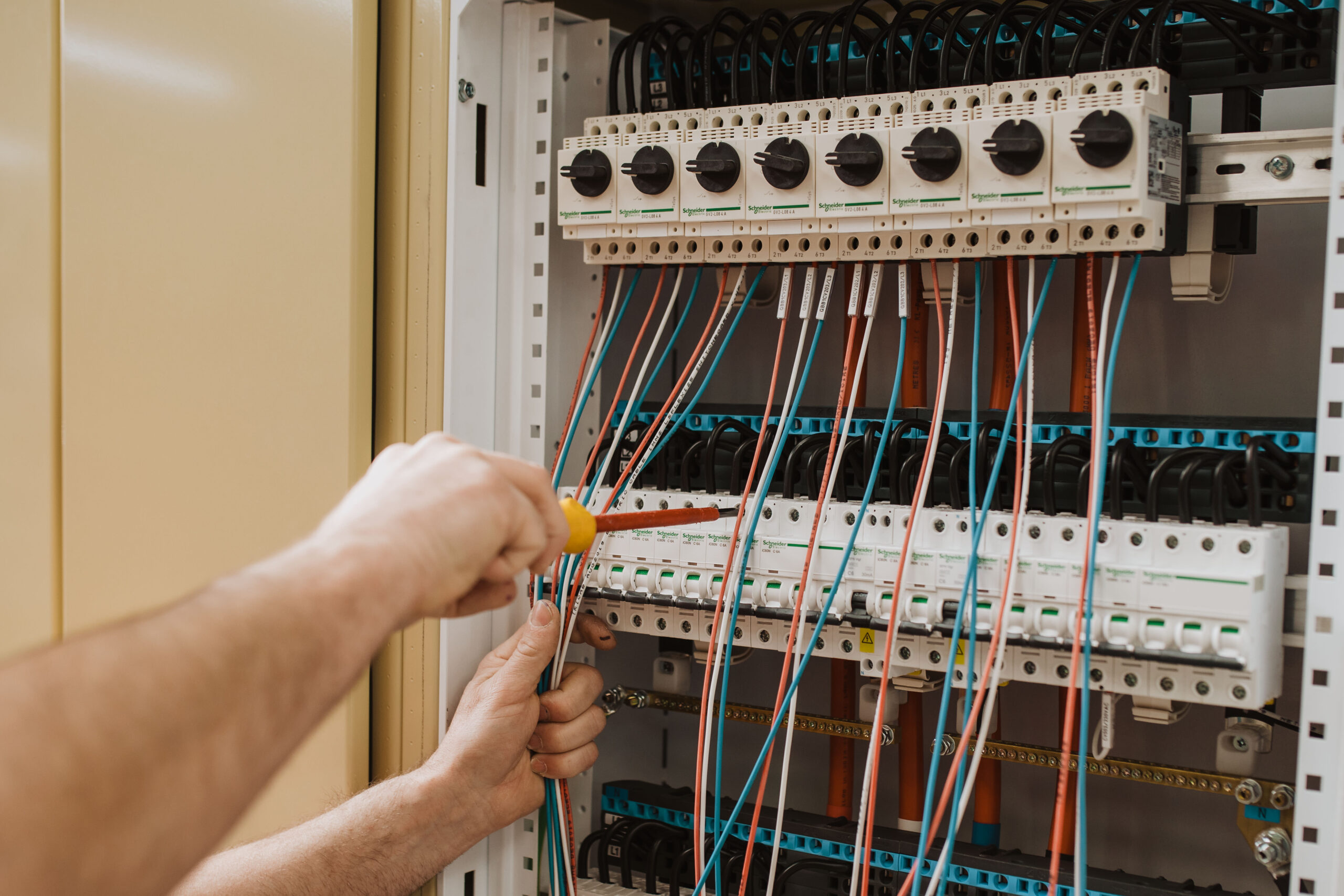
Electrician assessing an existing switchboard for upgrade or replacement - Clive Wilson Switchboards NZ

If you are planning a switchboard upgrade or replacement, the most useful starting point is not the price. It is the information.

Existing site switchboard work is usually more complex than a comparable new build board because the project has to deal with the realities of what is already installed. That can include restricted access, limited shutdown windows, ageing equipment, incomplete drawings, unknown cable conditions, and physical constraints that are only obvious once the site is reviewed properly.

Important: If drawings are unavailable or site conditions are uncertain, a pre-enquiry site visit is the most effective way to scope the project accurately before committing to a price.

At a practical level, a good enquiry needs enough detail to answer six questions clearly:

  1. 1What does the existing board do now? Role, loads, location, condition.
  2. 2What needs to change in the new board? Additional capacity, new circuits, compliance upgrades, or a full like-for-like replacement.
  3. 3What electrical duty must the replacement or upgrade meet? Main rating, fault level, busbar configuration, protection coordination.
  4. 4What physical and site constraints apply? Footprint, access, cable entry, IP conditions, transport route into the room.
  5. 5How will shutdown, removal, and installation be managed? Outage windows, staged cutover, temporary supply, critical services.
  6. 6What compliance, testing, and documentation expectations apply? AS/NZS 61439 verification, drawings, labelling, handover pack.

The clearer those answers are, the easier it is to define scope, compare quotations properly, and reduce avoidable redesign later.

Why switchboard upgrade and replacement work needs more detail than new-build

A new switchboard for a new building is usually designed around known parameters. A replacement or upgrade board often has to fit within existing conditions that may be only partly documented. That changes the risk profile.

Common complications in replacement projects include:

  • outdated or incomplete single line diagrams
  • uncertain cable sizes, routes, or termination conditions
  • restricted switchroom space
  • difficult access for delivery or removal
  • staged cutover requirements
  • limited outage windows
  • the need to keep other services operating during part of the work
  • uncertainty about what will be found once the existing board is isolated and opened

That is why a brief enquiry such as “please quote a replacement switchboard” is rarely enough on its own. The project may still be quotable, but the response will rely on assumptions, exclusions, or later clarification.

Upgrade or replacement: define which one it actually is

These terms are often used loosely, but they are not always the same thing.

A replacement project usually means

  • an existing board is being removed and substituted with a new assembly
  • the physical footprint, cable entry arrangement, or installation method may need to align with existing conditions
  • shutdown and changeover planning is often critical

An upgrade project may involve

  • modifying an existing board
  • increasing capacity or changing the main rating
  • adding sections or outgoing ways
  • changing enclosure arrangements
  • improving compliance or safety features
  • reworking part of the assembly while retaining other elements

This distinction matters because the information needed can differ. A full replacement often places heavier emphasis on removal, access, dimensional fit, and cutover sequencing. An upgrade may place more emphasis on compatibility, retained equipment, and how the new work interfaces with the existing installation. For boards no longer supportable, see our notes on switchboard maintenance and end-of-life indicators.

The practical checklist: what information should be gathered?

The easiest way to approach this topic is as a project-definition checklist. These are the ten areas that determine whether a replacement or upgrade can be priced, designed, and planned with confidence.

1. Existing board details

Start with the board that is already in service. Useful information includes:

  • board designation or name
  • location on site
  • what part of the installation it serves
  • whether it is a main switchboard, submain board, distribution board, services board, motor control centre, or plant board
  • approximate age if known
  • current layout or configuration
  • known issues with condition, performance, or capacity
Builder’s note: Photographs of the existing board, its nameplate, and the surrounding switchroom are worth their weight in gold at enquiry stage. A few clear site photos often reveal more about the real project scope than a written description ever will.

2. Reason for the upgrade or replacement

The project should define why the work is being done. Typical drivers include:

  • the existing board is at end of life
  • the installation needs more capacity
  • there are compliance or safety concerns
  • switchgear is obsolete or difficult to support
  • there is physical damage or deterioration
  • the site is being expanded or reconfigured
  • reliability or maintenance concerns are driving replacement

The reason helps shape the scope. A board being replaced because it is physically deteriorated may need a different solution from one being upgraded to support new loads or a building alteration.

3. Electrical ratings and supply basis

This is one of the most important technical sections. The project should include, where available:

  • supply characteristics (voltage, phases, frequency, earthing arrangement per AS/NZS 3000)
  • main rating
  • incomer arrangement (MCCB, ACB, fused switch, isolator, direct busbar)
  • required busbar rating and bracing
  • known fault level (PSCC) or fault rating requirement
  • any expected increase in load or future allowance

If the fault level is known, it should be stated clearly. If it is still being confirmed, that uncertainty should be identified rather than left hidden. In upgrade and replacement work it is especially important not to assume that the new board can mirror the old one without checking whether site loads, protection requirements, or system conditions have changed. See our guide on what fault rating a switchboard needs.

4. Outgoing circuits and functional scope

A replacement board is not defined only by its main rating. It also needs to be defined by what it has to distribute, protect, or control. Useful information here includes:

  • outgoing feeder schedule
  • quantity of ways required
  • device types where known
  • spare way expectations
  • metering requirements (revenue, sub-metering, power quality)
  • control, interlocking, or automation and PLC integration
  • load groupings that need to be retained or changed
  • any essential services or critical loads that affect sequencing
Builder’s note: A spreadsheet with a full motor schedule and load schedule is gold. Paired with even a rough single line sketch, it takes most of the guesswork out of quoting and lets the manufacturer price against real numbers rather than assumptions. If both are supplied at enquiry stage, returned quotes will be more consistent and far more accurate.

5. Dimensions, footprint, and physical constraints

This is where replacement work often becomes more complicated than people expect. Helpful inputs include:

  • room dimensions and access paths
  • whether the new board must fit the existing footprint
  • ceiling height or lifting restrictions
  • front and rear access limitations
  • cable entry direction and available space
  • plinth or mounting arrangement
  • whether the board must be split for transport or installation
  • any restrictions on weight, crane access, or movement through the building

A board that works electrically may still be impractical if it cannot be delivered into the room, positioned safely, or aligned with the available cable approach.

6. Site access and installation conditions

Quoting and planning both improve when real site conditions are known early. Examples include:

  • indoor or outdoor location
  • weather exposure
  • dust, moisture, washdown, or corrosive conditions
  • access hours or site permit rules
  • operational restrictions in occupied buildings or live facilities
  • whether installation must be staged around other trades or operations

These details may influence enclosure design, IP requirements, installation planning, and commercial allowances.

7. Shutdown and changeover requirements

This is often the most commercially important part of a replacement project. Questions worth clarifying early include:

  • When can the board be shut down?
  • How long can the outage last?
  • Can the work be staged?
  • Are temporary supplies needed?
  • Are there critical services that must remain available?
  • Are after-hours or weekend works likely?

For many existing-site projects, the shutdown strategy is not a minor operational note. It is central to how the board is designed, priced, delivered, and installed.

8. Drawings, photos, and reference documents

Documentation quality strongly affects quote quality. Useful source material may include:

  • single line diagrams (SLD)
  • switchboard schedules
  • site photos
  • floor plans or layout drawings
  • consultant specifications
  • previous board drawings, GA, or schematic files if available
  • site inspection notes
  • maintenance reports or thermographic inspection records identifying issues with the existing assembly

Not every project will have a complete package. But the more reference material available, the less the scope has to rely on guesswork. Where design input is needed, our electrical consulting and design team can work alongside the project engineer to complete missing information.

9. Compliance, testing, and documentation expectations

The enquiry should also define what the finished project needs to deliver beyond the physical board itself. Depending on the project, that may include:

  • compliance to AS/NZS 61439 for low-voltage switchgear and controlgear assemblies
  • installation compliance to AS/NZS 3000 and the Electricity (Safety) Regulations 2010
  • routine verification testing, Factory Acceptance Testing (FAT), Inspection Test Plans (ITP)
  • as-built documentation (GA drawings, schematics, EPLAN or PowerCAD exports)
  • labelling requirements (engraved circuit directories, traffolyte labels, duty labels)
  • manuals or schedules
  • evidence required for handover

It is better to identify these requirements early rather than introduce them once the quotation or build is already underway.

10. Delivery timing and programme constraints

If the project has a delivery date, outage milestone, staged installation sequence, or procurement deadline, that should be included in the initial scope. Programme information helps clarify:

  • whether the requested lead time is realistic
  • whether staging needs to be planned into the build
  • whether the board format may need to respond to installation timing
  • whether other project dependencies affect the quote

A technically detailed enquiry can still be incomplete if it says nothing about time.

A replacement project is not just a new board. It is a new board that has to fit a site, a shutdown window, and an installation reality that already exists. Every one of those shapes the design.

Common information gaps that cause trouble later

In practice, replacement and upgrade projects often slow down because one or more of the following is missing:

  • no clear outgoing schedule
  • no confirmed fault level
  • no dimensional information about the existing location
  • no site photos
  • no explanation of shutdown limits
  • unclear scope around removal, reconnection, or installation
  • late changes to IP rating, segregation, or metering requirements
  • hidden uncertainty about the existing cable arrangement

These gaps do not always stop a quotation. But they often lead to clarifications, assumptions, or a broader qualification basis.

Pre-enquiry checklist

Before requesting pricing for a switchboard upgrade or replacement

Board name, location, and function confirmed
Summary of why the work is needed
Key electrical ratings and known fault level
Outgoing feeder schedule or circuit list
Photos and any available drawings
Room, access, and dimensional constraints
Shutdown and changeover requirements
Environmental and enclosure requirements
Compliance and documentation expectations
Target delivery or programme dates

If several of those are missing, the project may still proceed, but the quoting basis is likely to be less certain.

Switchboard upgrade and replacement support across New Zealand

Clive Wilson Switchboards handles switchboard upgrade, replacement, and retrofit projects nationwide from our Invercargill workshop. Current and recent replacement projects span from Auckland and Northland in the north, through Hamilton, Tauranga, Rotorua, New Plymouth, Napier-Hastings, Palmerston North, Wellington, Nelson, and Queenstown, to regional infrastructure across Southland and the West Coast.

Replacement and upgrade work crosses every sector we serve: meat works in Auckland, dairy and food processing plants in Taranaki, Waikato, and Southland, water and wastewater upgrades in Wellington and New Plymouth, aluminium and metals processing facilities in Southland, and commercial and light industrial boards in Hamilton and Tauranga. The same ten information areas in this guide apply regardless of location or sector.

We build on four proven platforms: Schneider Prisma Plus G (accredited builder), Simotrol, Logstrup, and Quantum. Platform selection is driven by your specification, fault level, IP requirement, footprint, and operational environment. Manufactured under our ISO 9001-certified quality management system, with assemblies designed and verified to AS/NZS 61439. Avetta registered and SiteSafe registered for procurement on major infrastructure projects. See our case studies for examples of recent upgrade and replacement work.

Final thoughts

What information is needed for a switchboard upgrade or replacement? More than just the board size or a rough scope note.

A good enquiry should describe the existing installation, the new technical requirement, and the practical realities of the site. That combination is what allows the project to be reviewed properly.

The main goal is not to create paperwork for its own sake. It is to reduce ambiguity early so the replacement or upgrade can be priced, designed, and planned on a realistic basis.

Circuit identification labels and directories should be reviewed and updated as part of any switchboard replacement or upgrade. For engraved identification plates and circuit labels, see our engraving service.

Frequently asked questions

What is the difference between a switchboard upgrade and a switchboard replacement?+

A switchboard upgrade involves modifying an existing board, adding circuits, replacing protective devices, or improving capacity, without a full removal. A replacement involves taking out the existing board entirely and installing a new assembly. Each approach has different scoping, shutdown, and compliance implications and the distinction should be established early.

What existing site information should be gathered before a switchboard replacement?+

Useful information includes the existing board name and location, what loads and circuits it currently serves, the incoming supply details, the physical dimensions and footprint of the existing board, available shutdown windows, and any known condition or capacity issues. Photographs, existing drawings, and cable schedules are also valuable if available.

How long does a switchboard replacement typically take from order to commissioning?+

Manufacture of a new switchboard typically takes 6 to 12 weeks once design is finalised and order confirmed, depending on complexity. The physical changeover (disconnection, removal, installation, and recommissioning) can range from several hours for simple boards to multiple days for complex main switchboards requiring planned shutdown windows.

Can switchboard upgrade work be carried out while the board is energised?+

Some upgrade tasks can be performed live under appropriate safety procedures, but most structural changes, new circuit additions, and device replacements require a de-energised board. The scope of live versus shut-down work should be agreed and documented at the planning stage before any work begins.

What documentation should be provided after a switchboard replacement in New Zealand?+

Post-completion documentation should include updated wiring and schematic drawings, a circuit schedule reflecting the new installation, test and verification records under AS/NZS 61439, Factory Acceptance Testing records, component data sheets, and a final schedule signed off by the responsible electrical engineer or certifier where required.

When should a replacement be considered instead of an upgrade?+

A full replacement is usually the right call when the existing board is more than 25 to 30 years old, when the supporting switchgear is obsolete or unavailable, when the fault level has outgrown the original assembly, when compliance documentation to current AS/NZS 61439 cannot be established, or when repeated modifications have left the assembly hard to maintain safely. An upgrade is appropriate where the base assembly is sound and only specific sections or ratings need to change.

Do you carry out site visits before quoting a switchboard replacement?+

Yes. For projects where drawings are incomplete, where site conditions carry meaningful uncertainty, or where shutdown planning will drive the build strategy, a pre-enquiry site visit is the most reliable way to scope the work. We travel for site visits nationwide from our Invercargill workshop.

Related articles

Next step

Planning a switchboard upgrade or replacement in NZ?

We can help you review the available project information, identify what is still needed, and scope the work before pricing and design move ahead. Based in Invercargill, supplying LV switchboards, MCCs, and distribution boards nationwide since 1971.

03 214 4264
·
admin@clivewilson.co.nz

Request a Quote →

Reviewed by Chris Wilson, Co-Director, Clive Wilson Switchboards. Registered electrician, 15+ years in LV switchboards. Updated April 2026.


Call Us

Contact Us