
Mechanical services
switchboards.
CWS manufactures mechanical services switchboards in Invercargill for HVAC, pumping, refrigeration and building-services projects throughout New Zealand. MSSBs can integrate motor starters, VSDs, protection, controls and BMS interfaces around the mechanical equipment schedule and approved operating requirements.
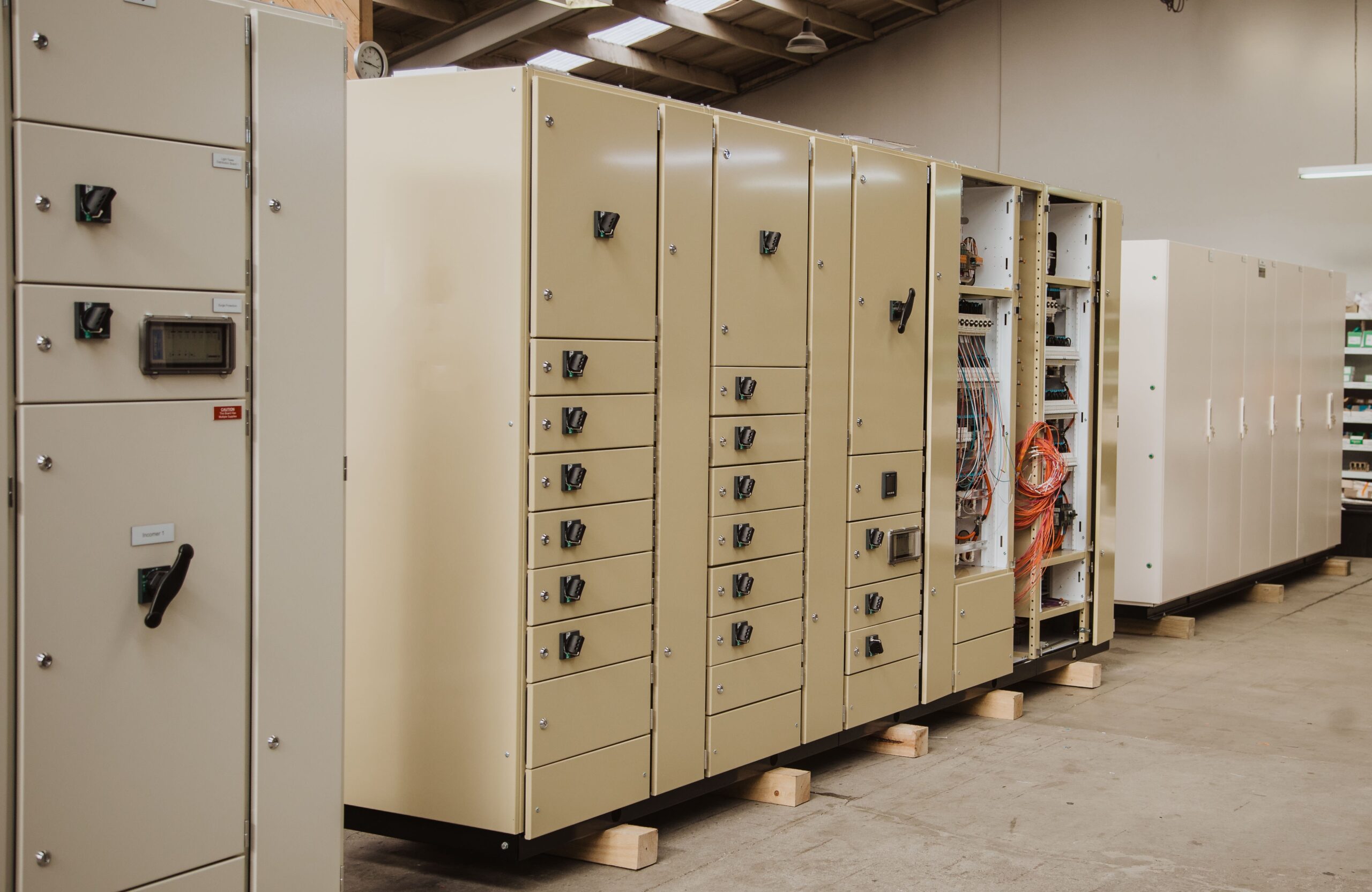
Separate equipment supply from equipment control.
A mechanical services switchboard can include outgoing supplies, motor starters, variable speed drives and controls. The correct scope depends on what is already supplied inside the chiller, air handling unit, pump package or other mechanical equipment.
Some packaged equipment needs only a protected power supply and an enable signal. Other equipment needs its starter, drive or sequence control provided externally. Identifying that difference early prevents duplicated components and missing interfaces.
Read the schedule alongside supplier data
Equipment tags, quantities and electrical duties should align with the mechanical drawings and supplier connection requirements. Identify single-phase and three-phase supplies, starting arrangements, local isolators, control voltages and any separately supplied panels.
Coordinate the plantroom layout
Board position, incoming and outgoing cable routes, access for servicing and environmental exposure all affect the enclosure. Provide the plantroom layout and the anticipated installation sequence before the board arrangement is fixed.
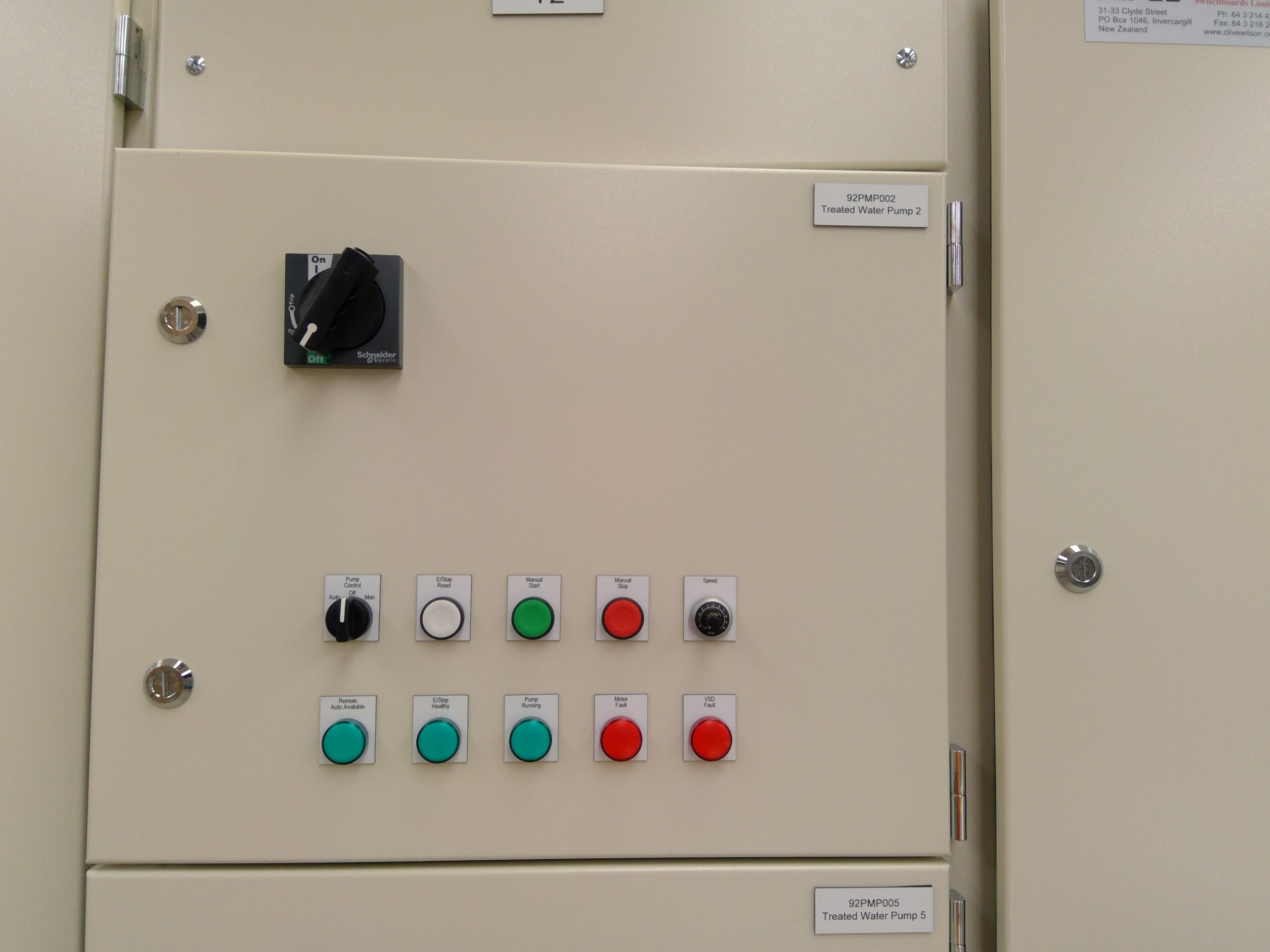
Commands, feedback and BMS interfaces.
A building management system connection needs more definition than a note saying BMS interface. Agree the signal list, electrical characteristics or network protocol, ownership of the controller and the behaviour expected at each device.
| Interface | Definition required |
|---|---|
| Enable or start command | Who issues the command, how it is connected and which local conditions must permit operation. |
| Running or healthy feedback | Whether the signal proves contactor operation, drive status, airflow, pressure or another physical condition. |
| Speed or process reference | The source, signal type, range, scaling and response to an invalid or missing reference. |
| Trip and alarm | The fault to be reported, required reset behaviour and whether separate faults or a common alarm are needed. |
| Local, off and automatic selection | Which device has control in each mode, how the mode is indicated and which interlocks remain active. |
| External interlock | The signal source, required action, reset conditions and the party responsible for approving the sequence. |
Allocate supply of the BMS controller, sensors, actuators, programming, licences and field cabling explicitly. The MSSB can be manufactured for a separate controls contractor, or an automation scope can be agreed with CWS.
The sequence is part of the switchboard brief.
Duty and standby pumps
Confirm how the duty pump is selected, whether changeover is based on time or availability, what proves successful operation and what happens after a failure. Define whether the standby pump may start automatically and under which approved conditions.
Fans, dampers and proving signals
Identify any required relationship between damper position, fan command and airflow or pressure proof. Specify timers, alarm handling and operator reset requirements as part of the approved functional description, rather than leaving them to interpretation during commissioning.
Refrigeration and packaged plant
Clarify the boundary between the MSSB and the equipment manufacturer’s controls. External commands, run permissions and fault reporting need to respect the supplied package and its own protection requirements.
Life-safety interfaces need an approved cause-and-effect. Fire, smoke-control and other safety-related actions are not assumed to be standard BMS stop commands. Their design, equipment requirements and validation must be allocated to the responsible project parties.
VSD and starter placement
State whether drives and starters are inside the MSSB, mounted locally at the equipment or supplied within a packaged unit. This changes the outgoing circuits, heat load, cable requirements and control connections.
Restart and power loss
Agree the response to supply restoration and lost BMS communications. The sequence may need staged restarting or operator acknowledgement; that decision belongs in the approved operating requirements, not in an assumed default.
Agree the checks before handover.
The factory test can verify the supplied wiring and agreed simulated controls, but it cannot prove the performance of an unconnected fan, damper, sensor or refrigeration package.
Before the site test, align the switchboard drawings, mechanical equipment tags and BMS point schedule. Agree who confirms field wiring, configures third-party devices, proves the process conditions and accepts the complete operating sequence.
- Record the final equipment and circuit identification.
- Check commands and feedback against the agreed point schedule.
- Demonstrate local and automatic operating modes within the approved test plan.
- Record unresolved interfaces and assign responsibility for closing them.
- Update the drawings and settings to match the commissioned arrangement.
Information that makes quotations comparable
Send the mechanical equipment schedule, electrical supply data, plantroom layout, functional description and BMS point list. Include the available fault level, enclosure requirements, drive locations and the required installation date.
Identify which supplier provides each controller, starter, drive, isolator and field device. State whether site wiring, BMS programming and integrated commissioning are in or out of the requested scope.
Related board types
For a predominantly process-motor application, compare our motor control centres. For ordinary lighting and power circuits without plant sequencing, see distribution boards.
Clear interfaces make a better installation.
The most useful early conversation is often between the mechanical designer, controls contractor and board manufacturer, before their separate scopes are finalised.
Can you build an MSSB for our BMS contractor?
Yes. Provide their controller, signal and installation requirements. Agree whether controllers are supplied free-issued or included, and who is responsible for software, field devices and commissioning.
Does every mechanical motor need a starter in the board?
No. Some equipment includes its own starter or drive. The equipment supplier’s connection information determines whether the board provides a supply only or additional motor control.
Can an MSSB include both power distribution and controls?
Yes. The assembly can combine the required circuits and controls, with the arrangement, protection, heat management and separation assessed for the specified application.
Put the requirements
in the brief.
Identify the standard, part and edition, current ratings, fault conditions, environment and verification records required for your project.
Understand the distinction between cited standards and subsequently published editions.
Prepare a switchboard specificationUse the enquiry checklist to prepare a comparable quotation.
Bring the plant schedule.
Define every interface.
Include mechanical equipment schedules, BMS points, sequences and supplier information.
Printable quote checklist (PDF)Email your checklist, drawings and schedules to estimating@clivewilson.co.nz. Leave unknown items blank.
Discuss an MSSBOr call +64 3 214 4264