
Durability comes from a suitable coating system applied properly to a prepared surface. The powder, pretreatment, part design, cure and service environment all contribute. No finish is automatically scratch-proof or corrosion-proof.
The coating is one part of a system
The finished film provides a protective and decorative layer, but its performance depends on what is underneath and what it is exposed to. A clean, suitably prepared surface is fundamental. Contamination or active corrosion beneath the coating can undermine an otherwise good-looking finish.
Part design matters too. Sharp edges, crevices, trapped water and inaccessible recesses can make protection harder to achieve. Discuss those details while fabrication can still be changed.
Five contributors to durability
| Factor | What to discuss |
|---|---|
| Preparation | Metal type, condition, removal of old coatings and the selected pretreatment. |
| Coating chemistry | Suitability for sunlight, weather, chemicals and expected wear. |
| Film build | Coverage and thickness appropriate to the coating system and part. |
| Cure | The product’s required metal temperature and time. |
| Service conditions | Exposure, cleaning, damage and ongoing care. |
More thickness is not automatically better, and a higher oven setting is not a shortcut to a better cure. The process needs to stay within the product’s application requirements.
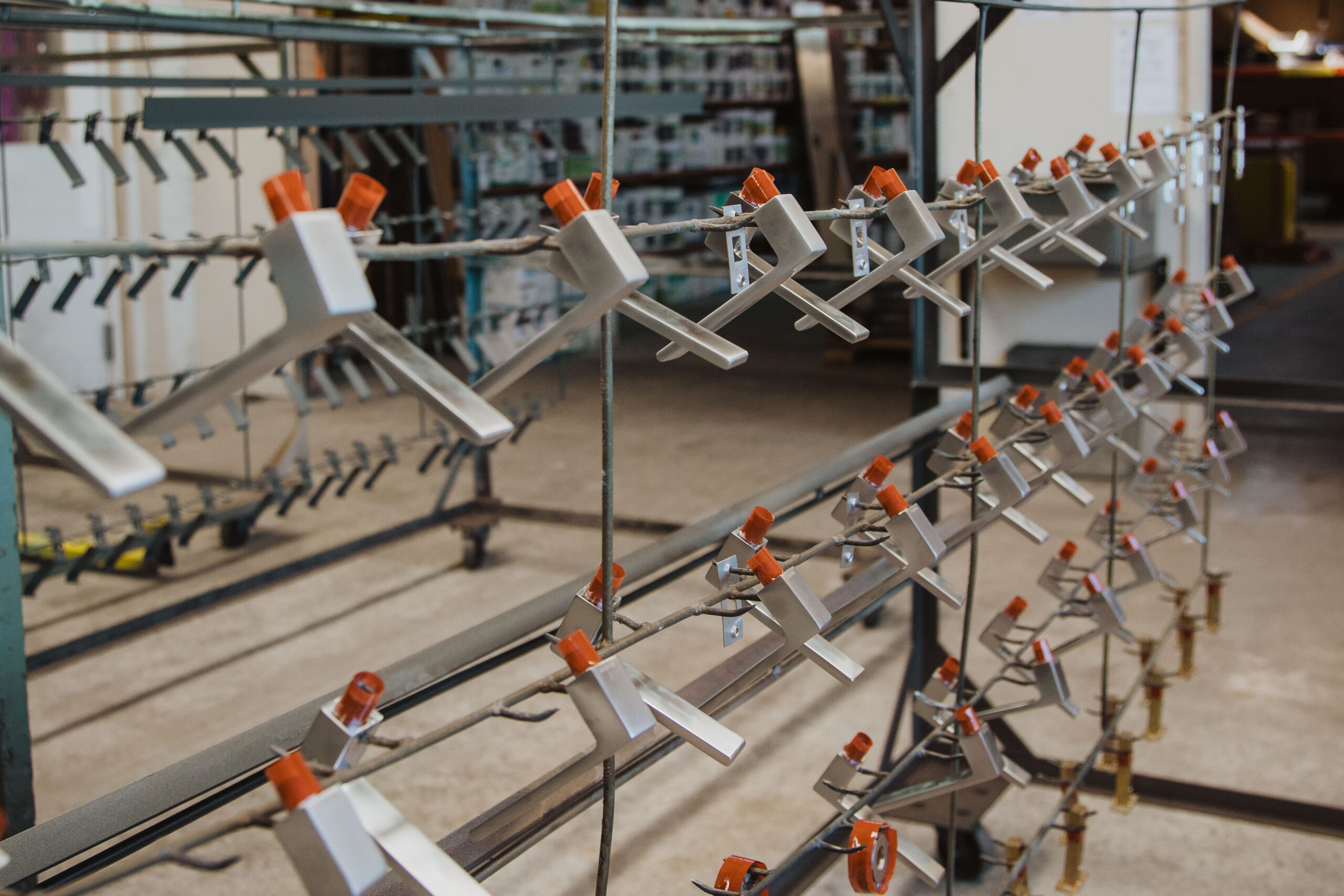
Match the finish to the exposure
A sheltered indoor item and a coastal outdoor component face different conditions. State the actual environment, including direct sun, salts, cleaning chemicals and abrasion. The finish can then be selected for the job rather than only for the colour.
Some demanding applications need a particular pretreatment or multi-coat system. That is a system decision, not a reason to specify the same zinc primer on every metal or every part. The coating supplier’s recommendations should support the proposed combination.
Why early damage occurs
- Corrosion or contamination left beneath the finish.
- Water trapped around joints or damaged edges.
- Incorrect product selection for outdoor or chemical exposure.
- Insufficient coverage in difficult areas.
- Application or cure outside the product requirements.
- Damage during transport, installation or use.
If a part has failed before, send photographs and explain when and where the coating broke down. That information is more useful than simply requesting a thicker version of the same finish.
Specify performance without inventing a lifespan
There is no honest universal “15 to 25 years” promise for all powder coating. Service life depends on the system, environment and care. Any warranty has its own product, substrate, application and maintenance conditions.
For your powder coating enquiry, include dimensions, substrate, condition and exposure. Agree appearance and performance expectations with the team. Then keep the cleaning and inspection routine suited to the finished job.
Questions we hear
Is powder coating stronger than every liquid paint?
No. Compare complete coating systems for the actual exposure. Both the product and application quality matter.
Can powder coating chip or scratch?
Yes. It can resist wear well when correctly selected and applied, but impact, abrasion and damaged edges can still expose the substrate.